

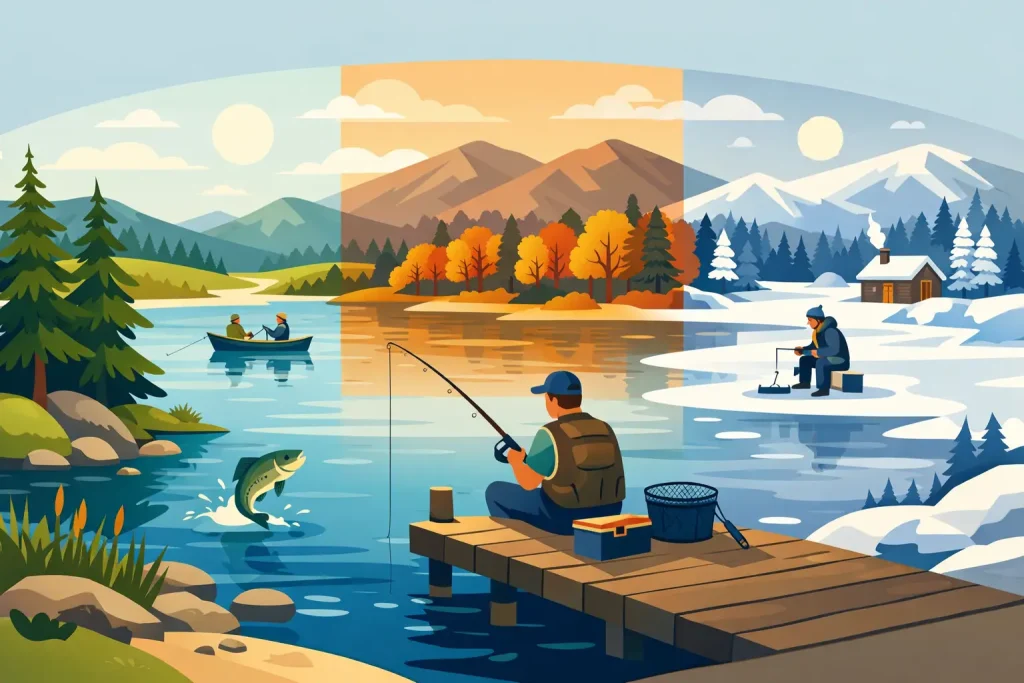
A quiet morning on Big Bear Lake can start with little more than a thermos, a tackle box, and the sound of line slipping through the guides. At more than 6,700 feet, this mountain lake gives Southern California anglers a refreshing change of pace – cool air, pine-covered views, and fishing that can fit just as easily into a family weekend as a dedicated day on the water. This Big Bear Lake fishing guide helps you plan around the season, choose the right approach, and build a comfortable fishing getaway around your time outdoors.
When to Fish at Big Bear Lake
Big Bear Lake fishes differently as the weather changes, which is part of its appeal. There is no single perfect month for every angler. Trout-focused visitors often favor the cooler parts of the year, while warm-weather trips open up more comfortable mornings for bass, panfish, and relaxed boat days with the family.
Spring brings cool water and active trout
Spring can be a rewarding time for trout anglers as the lake begins to wake up after winter. Water temperatures remain cool, and fish may cruise closer to shore, especially early in the day. Conditions can vary widely from one week to the next at this elevation, so pack layers and check the forecast before heading up the mountain.
This is a great season for a cabin weekend: fish in the morning, warm up with lunch at your home base, then head back out when conditions settle. Light rain gear, waterproof shoes, and a backup indoor plan make spring trips much more enjoyable.
Summer is made for early starts and boat time
Summer brings long daylight hours, sunny lake days, and plenty of opportunity for families to mix fishing with paddling, sightseeing, and Village time. Trout can move deeper as the water warms, so a boat can be especially useful for anglers who want to reach cooler water. Bass, bluegill, crappie, and catfish may offer fun alternatives depending on location, time of day, and current lake conditions.
The trade-off is that afternoons can become breezy, and popular lake areas are busier. Get on the water early, enjoy the calmest conditions, and save swimming, dining, or a cabin barbecue for later in the day.
Fall offers peaceful lake days
For many visitors, fall is one of Big Bear’s most enjoyable fishing seasons. Cooler mornings return, summer crowds ease, and the lake feels especially peaceful beneath changing mountain color. Trout interest picks up as water cools, while anglers can still find opportunities for other species during mild stretches.
Fall weather is often pleasant, but mountain temperatures can drop quickly once the sun disappears. Bring an extra fleece, especially if you plan to stay through the evening bite.
Winter fishing requires flexibility
Winter fishing can be memorable, but it depends heavily on weather, snow conditions, ice, access, and lake operations. Fishing may be possible during open-water periods, but visitors should never assume standard boat access or shoreline conditions. Check current weather, road conditions, and local fishing updates before you leave home.
A winter cabin stay is best planned with flexibility. Treat a successful fishing window as a bonus alongside snowy walks, cozy fireside evenings, and mountain dining.
Big Bear Lake Fishing Guide to Local Species
Rainbow trout are the headline catch for many Big Bear Lake visitors, and seasonal stocking can make them a popular target for shore anglers and boaters alike. Productive presentations often include bait, small lures, jigs, and flies, but the best choice depends on water temperature, depth, wind, and the fish’s mood that day.
The lake also supports largemouth and smallmouth bass, along with catfish, crappie, bluegill, and other panfish. These species give families and mixed-skill groups more ways to enjoy a day outside. A child watching a bobber near shore may be just as happy catching bluegill as an experienced angler is chasing a larger trout offshore.
Keep expectations realistic. Stocking schedules, water levels, weather patterns, and fishing pressure all affect results. Big Bear rewards patience, particularly when you adjust rather than stubbornly fishing one lure or one depth all day.
Shore Fishing or a Boat?
Shore fishing is the simplest choice for a quick getaway. It is approachable for first-timers, easy to pair with a family picnic, and requires less gear than a full boat setup. Look for lawful public access areas with room to cast safely, and avoid crossing private property or blocking marina operations. Shoreline access can change with water levels and seasonal management, so confirm the current rules when you arrive.
A boat gives anglers more mobility and can be worthwhile when trout are holding deeper or when you want to explore quieter water. Rentals, private boats, kayaks, and other watercraft each come with different rules, launch requirements, and safety considerations. If your group includes young children or casual anglers, a stable rental boat with a simple plan is usually more fun than trying to cover the entire lake.
Wind is the deciding factor more often than visitors expect. Big Bear mornings are commonly calmer, while afternoon gusts can make small-watercraft fishing uncomfortable or unsafe. Plan your serious fishing for early hours and keep an eye on changing conditions.
What to Pack for a Better Day on the Water
You do not need a tournament-level setup to enjoy Big Bear Lake. A medium-light spinning rod covers many visitor needs, especially for trout and panfish. Bring a small selection of hooks, sinkers, bobbers, bait or artificial lures, needle-nose pliers, sunscreen, polarized sunglasses, and a cooler if you plan to keep legal fish.
Mountain weather is the gear item people forget. Mornings can feel chilly even in summer, and bright sun at high elevation can be intense. Wear layers, bring a hat, and keep a light jacket handy. If you are fishing from a boat, pack water, snacks, and required safety equipment. A dry bag is helpful for phones, wallets, and spare clothing.
For families, keep the first outing simple. Pick one location, fish for an hour or two, and let the day unfold from there. A shorter, successful experience usually creates better memories than an all-day push that leaves everyone cold, hungry, or frustrated.
Pair Your Fishing Trip With the Right Cabin Stay
A well-located cabin makes the fishing part easier because there is less time spent shuttling gear and more time enjoying the lake. Choose a home base with enough parking for your vehicle and boat trailer if needed, plus a kitchen for early breakfasts and easy post-fishing meals. A private spa, fire pit, or comfortable living room is especially welcome after a cool morning by the water.
Big Bear Lake Vacations offers cabins and chalets designed for the kind of trip that does not need a rigid schedule. Couples can enjoy a peaceful weekday escape, families can spread out after a lake day, and friend groups can keep the fishing stories going over dinner. Pet-friendly stays also make it easier to bring the dog along for lakeside walks and mountain downtime, though pets should stay safely away from hooks, bait, and active casting areas.
Consider your group’s priorities before choosing an area. A lake-adjacent stay may suit anglers who want quick water access, while a cabin near the Village can make it easier to pick up supplies, grab dinner, or split the day between fishing and local exploring.
Licenses, Rules, and Mountain Safety
Anglers age 16 and older generally need a valid California fishing license. Size limits, bag limits, permitted tackle, seasonal restrictions, and access rules can change, so review current California regulations and local lake guidance before casting. If you plan to keep fish, know the applicable limits and bring a cooler with ice.
Give other anglers space, pack out line and trash, and never leave hooks or bait containers along the shore. Monofilament can harm birds and wildlife, while food scraps can attract animals to popular recreation areas. On the water, wear the appropriate personal flotation device and turn back early if wind or weather builds.
The best fishing trip is not always the one with the fullest stringer. Sometimes it is the sunrise over the lake, a child’s first cast, and a warm cabin waiting when the rods are packed away.