

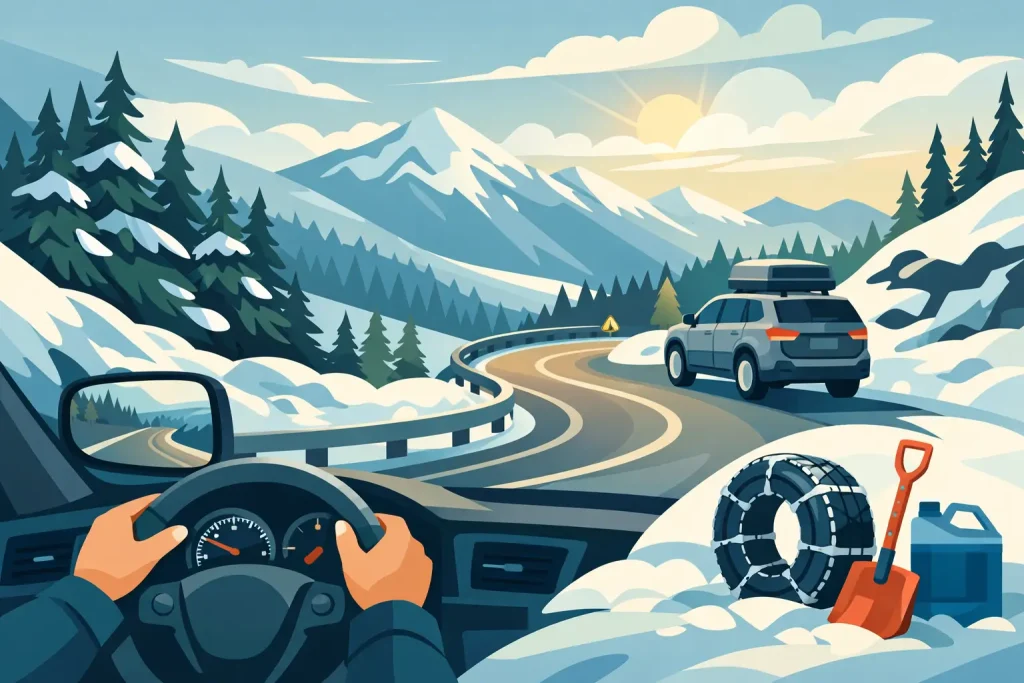
A blue-sky forecast in Southern California can change quickly as you climb toward Big Bear Lake. One minute the drive feels like an easy weekend escape; the next, shaded curves, falling snow, fog, or chain controls demand your full attention. Preparing for mountain driving conditions before you leave gives you more time to enjoy the cabin, the Village, the slopes, and the lake instead of worrying about the road.
Big Bear is absolutely worth the drive, especially when a snowy morning at Snow Summit or a crisp walk through Moonridge is waiting. The key is to treat the trip up as part of the mountain experience: plan ahead, allow extra time, and stay flexible when weather has other ideas.
Check conditions before you start the climb
Do not rely on the weather where you live. Temperatures in the foothills and around Big Bear Lake can be dramatically different, and a forecast that looks mild at home may include snow, ice, or high winds at higher elevations.
Check the road conditions on the day you travel, then check them again shortly before departure. Pay attention to active chain requirements, closures, traffic delays, and the timing of incoming storms. Conditions can shift during a single afternoon, particularly after sunset when wet pavement can refreeze on shaded stretches.
It also helps to choose your route with the weather in mind. The main approaches to Big Bear can have very different traffic patterns and conditions depending on where the storm is moving. Your preferred route may be the fastest on a clear Friday morning but less appealing during heavy snowfall or a busy holiday arrival window. If officials advise avoiding travel, rescheduling your drive is the smart call.
Give yourself daylight and breathing room
Arriving in daylight is one of the easiest ways to reduce stress. You can see road markings, icy patches, wildlife, and turnoffs more clearly, and unloading your vehicle at your cabin is much simpler before dark. Winter weekends bring extra traffic, so leave earlier than your map app suggests and build in time for chain installation, fuel, food, and slower-than-normal driving.
If your schedule is flexible, consider arriving before a storm or after road crews have had time to clear major routes. There is no prize for pushing through the worst part of a weather event. A relaxed arrival is a much better start to a mountain getaway.
Preparing mountain driving conditions starts with your vehicle
A capable vehicle helps, but four-wheel drive or all-wheel drive is not a substitute for careful driving. Every vehicle needs tires with sufficient tread, working brakes, clear visibility, and a driver willing to slow down. Even experienced mountain travelers can lose traction when they carry too much speed into a curve or brake suddenly on slick pavement.
Before departure, fill the fuel tank, top off windshield washer fluid with a winter-ready formula, and make sure your battery is in good condition. Cold temperatures make batteries work harder, and mountain stations may not be conveniently located when you need one. Check tire pressure before leaving, because pressure drops in colder air.
California chain controls can apply to many vehicles during snowy conditions. Carry chains that fit your specific tire size, not a generic set that has never been tested. Practice putting them on in dry conditions at home, where you have light, space, and patience. The first time should not be on a snowy shoulder with cars passing by and a cold wind picking up.
Keep the chain instructions, a flashlight, waterproof gloves, an old towel or ground mat, and a pair of warm layers where you can reach them. Chain installers may be available in some areas, but availability is never guaranteed. You are still responsible for meeting the requirements in effect.
Pack for the drive, not only the cabin
Your Big Bear cabin may have the cozy essentials waiting – a warm living room, a kitchen for group meals, perhaps a spa, fire pit, or fenced yard for your dog – but your vehicle needs its own small winter kit. This is less about expecting trouble and more about being comfortable if traffic pauses or conditions change.
Bring drinking water, easy snacks, medications, phone charging cables, a blanket, and extra hats and gloves. A scraper and brush are useful even when snowfall is not in the forecast. Keep a small shovel, traction aid, and basic first-aid supplies in the car as well. Families should pack extra layers for children, since a quick stop to play in the snow can turn chilly faster than expected.
Traveling with a dog? Pack a leash, water bowl, towel, and a warm blanket for the car. Snow can be exciting for pups, but road salt, ice, and cold pavement are hard on paws. A pet-friendly Big Bear stay is more relaxing when your four-legged traveler is just as prepared as everyone else.
Drive for traction, not for the posted speed
Mountain roads reward smooth, patient driving. Increase your following distance well beyond what you would use on dry city streets. Brake gently and early, accelerate gradually, and avoid sudden steering movements. On a descent, use a lower gear when appropriate so you can maintain a controlled speed without riding the brakes.
Bridges, shaded corners, and areas beneath trees often freeze first and stay icy longer. Assume these stretches may be slick, even when the rest of the road looks clear. If you feel the vehicle begin to slide, ease off the accelerator, keep your steering calm, and look where you want the vehicle to go. Sharp corrections are more likely to make a skid worse.
Avoid stopping on steep hills unless traffic requires it. Getting moving again can be difficult on snow or ice, especially without chains. If you need to pull over to install chains or address a vehicle issue, choose a safe designated area whenever possible, turn on hazard lights, and stay aware of passing traffic.
What not to do in snow
The most common mountain-driving mistakes come from rushing. Do not use cruise control on slick roads. Do not pass snowplows, which need room to clear and treat the pavement. Do not tailgate a vehicle that is moving slowly through chain control. And do not assume a packed-snow road is safer because other vehicles have already driven over it.
A clean-looking road can still hide black ice. If the forecast calls for a storm, let your travel companions know that arrival time may change. That simple expectation setting keeps the whole group calmer.
Once you reach Big Bear Lake
The drive is not necessarily over when you reach town. Neighborhood streets and cabin driveways can remain snowy or icy after main roads have been plowed. Follow parking guidance for your rental, avoid blocking snow-removal access, and take a quick look at the driveway before committing to it. If you are unfamiliar with backing on snow, go slowly and use a spotter when available.
After parking, remove snow from around your tires if it has accumulated and make sure exhaust areas are clear before starting the vehicle again. Bring boots with good traction for carrying bags inside. A few careful minutes at check-in can prevent a slippery start to a beautiful stay.
Big Bear Lake Vacations is designed to make the rest of your trip feel easy, with a comfortable home base close to the mountain moments you came for. Check conditions, pack thoughtfully, and give the drive the respect it deserves. Then you can settle in, warm up, and let the pines, fresh snow, and wide-open mountain views do the rest.