

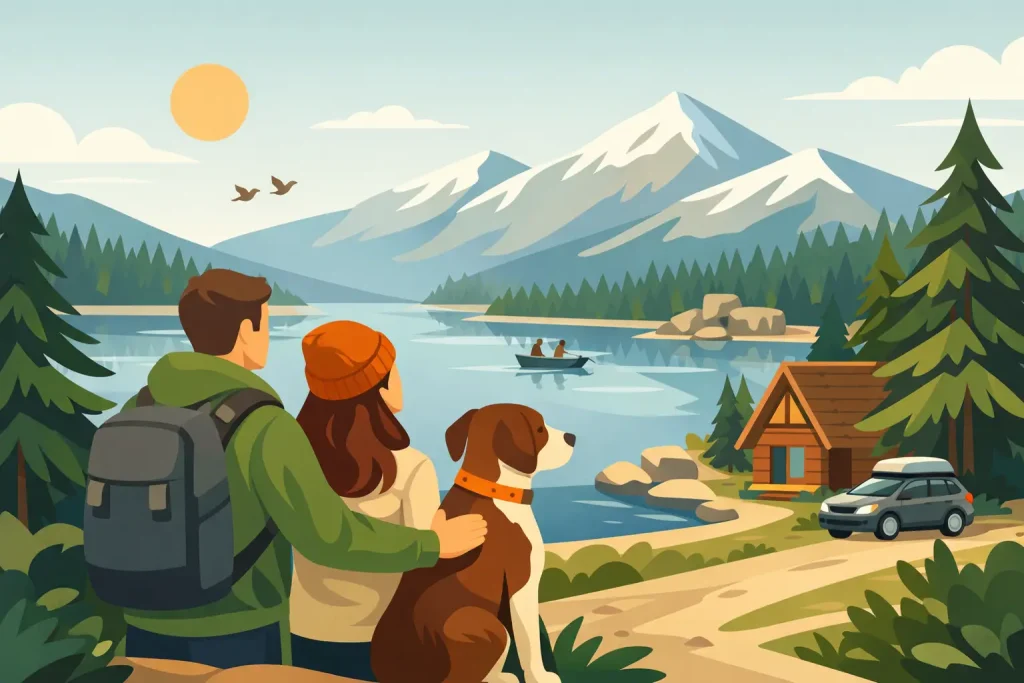
A mountain trip feels different when your dog is along for the ride. Morning walks through pine-scented air, a sunny cabin deck, and a post-hike nap by the fire can turn a quick Big Bear escape into a trip the whole family enjoys. Knowing how to plan a dog friendly getaway means looking beyond a listing that simply allows pets and choosing a stay, route, and daily rhythm that work well for everyone.
Start With a Truly Pet-Friendly Home Base
The right cabin gives your dog room to settle in while putting your group close to the activities you came to enjoy. When comparing pet-friendly Big Bear rentals, consider the practical details first: a fenced or usable outdoor area, easy access to walking routes, durable floors, a mudroom or entry space for snowy paws, and enough room for your group to spread out.
A cabin near the Village can make it easier to enjoy casual walks, patio dining, and quick errands. A quieter Moonridge or forest-side setting may be a better fit for dogs who prefer space and less foot traffic. For ski weekends, proximity to Snow Summit or Bear Mountain can reduce driving time, though your pup will still need a comfortable plan for time spent back at the cabin while the group is on the slopes.
Before booking, confirm the pet policy, the number and size of dogs permitted, and any expectations around crating, furniture, barking, and unattended pets. Pet-friendly does not always mean every dog can be left alone in an unfamiliar cabin for hours. If your dog gets anxious in new places, choose a shorter outing schedule and build in quiet time together.
Big Bear Lake Vacations offers pet-friendly cabin options designed for travelers who want the ease of a comfortable mountain home base without leaving a four-legged family member behind. Amenities such as yards, spas, fire pits, and nearby outdoor access can make a big difference after a full day outside.
How to Plan a Dog Friendly Getaway Around the Season
Big Bear changes dramatically through the year, and your dog’s comfort should shape your plans as much as the forecast.
Winter: Build in Warm-Up Time
Snow is exciting for many dogs, but cold paws, icy paths, and high-altitude winter weather require extra preparation. Pack a warm coat for short-haired or small dogs, towels for drying off, and paw protection if your dog tolerates boots or balm. Keep walks shorter during storms and check paws often for ice buildup.
Winter road conditions matter, too. Carry required traction equipment when conditions call for it, allow extra travel time, and avoid arriving after dark if snow is expected. Once you reach the cabin, make a clear potty area and keep your dog leashed near roads, plows, and unfamiliar snowy terrain.
Spring and Fall: Choose Your Hiking Window
Shoulder seasons are often ideal for a quieter mountain getaway, with cool hiking weather and fewer crowds. Conditions can shift quickly, however. Spring trails may be muddy or hold lingering snow in shaded areas, while fall mornings and evenings can be much colder than midday.
Plan your longest outing for late morning or early afternoon, then return to the cabin before temperatures drop. A fire pit evening or relaxed dinner becomes more enjoyable when your dog has already had exercise and a chance to settle down.
Summer: Protect Against Heat and Busy Areas
Big Bear is cooler than many Southern California destinations, but sunny trails and warm cabin decks can still heat up quickly. Bring more water than you think you will need, take shaded routes where possible, and test pavement with the back of your hand before walking through busy areas.
Lake days require a little extra care. Not every shoreline, dock, rental, or recreation area has the same pet rules, and regulations can change by season or water conditions. Check current guidelines before heading out, use a properly fitted canine life jacket for boating, and never assume a strong swimmer is safe around waves, boats, or cold water.
Make the Drive Part of the Plan
The road up to Big Bear is part of the adventure, but mountain driving can be a big adjustment for dogs. Feed your pup a light meal well before departure if motion sickness is a concern, and pack a familiar blanket or bed to help the car feel calmer. A secured crate or dog seat harness is safer than letting your dog move freely through the vehicle.
Schedule a stop before the final climb, especially if you are driving from the Los Angeles or Inland Empire areas. Once you are in the mountains, opportunities to pull over may be limited, and winter weather can make impromptu stops less convenient.
Keep a small travel kit within reach rather than buried in luggage. It should include water, a bowl, waste bags, a leash, treats, medication, a towel, and copies of vaccination records. Add a flashlight and reflective collar or light for evening walks. Mountain neighborhoods are darker than city streets, and wildlife is more active after sunset.
Plan Activities Your Dog Can Actually Enjoy
A dog-friendly itinerary should not mean bringing your pup along while they wait impatiently outside every attraction. Balance shared adventures with dog-free activities that are short, planned, and appropriate for your dog’s temperament.
Start with a simple neighborhood walk after check-in. Let your dog sniff, stretch, and become familiar with the cabin surroundings before asking them to relax indoors. The next day, choose a scenic trail or forest walk that matches your dog’s fitness level. Big Bear’s elevation can make a normally easy outing feel more demanding, particularly for older dogs, flat-faced breeds, puppies, or dogs arriving from lower elevations.
Keep your dog leashed unless you are in a designated area where off-leash use is permitted. Leashes protect wildlife, prevent stressful encounters with other dogs, and help avoid surprises around bikes, horses, or narrow trails. Bring waste bags and pack them out. The small courtesy matters in a destination people come to enjoy for its clean forests and lake views.
For meals, look for dog-welcoming patios and call ahead when possible. Patio policies can vary with weather, staffing, and local health rules. If dining out is part of the trip, choose one relaxed meal rather than structuring every day around restaurants. A well-equipped cabin kitchen makes it easy to prepare breakfast, pack trail snacks, and enjoy a low-key dinner after your dog has had a busy day.
Create a Cabin Routine That Prevents Stress
Dogs tend to settle faster when vacation days still have a familiar rhythm. Serve meals at roughly normal times, bring their usual food rather than changing diets on the road, and set up a dedicated sleep spot as soon as you arrive. A favorite toy, blanket, or crate can help an unfamiliar room feel like home.
Be mindful of noise. Cabin neighborhoods can be peaceful, and barking carries farther than many guests expect. Close blinds if your dog reacts to passing walkers or wildlife, use a fan or soft background sound indoors, and avoid leaving them on a deck unattended. Deer, squirrels, and other animals can be exciting from a distance but risky up close.
If your group wants to ski, go boating, or enjoy an activity where dogs cannot join, decide in advance who will return to the cabin for breaks. This is especially helpful for multi-family trips. A rotating schedule keeps one person from feeling stuck inside while making sure your dog is never left uncomfortable for too long.
Pack for Messy, Happy Mountain Days
Mountain dogs get dirty. A few thoughtful extras can save your cabin, car, and vacation mood: old towels, a portable paw cleaner, a lint roller, a waterproof blanket for furniture, and an extra leash. In winter, add a drying mat by the door. In summer, pack a cooling mat or lightweight shade option for outdoor lounging.
Bring your dog’s regular medication and enough food for the entire trip plus an extra day. Mountain roads and weather can occasionally change travel plans. It is also smart to save the contact information for a local veterinary clinic before you leave, particularly if your dog has chronic health needs.
The best Big Bear trips leave room for the unplanned moments: a slow morning on the porch, a new trail discovered after breakfast, or a nap while the afternoon sun moves across the pines. Give your dog that same breathing room, and your getaway will feel less like a logistical puzzle and more like the mountain reset you came for.