

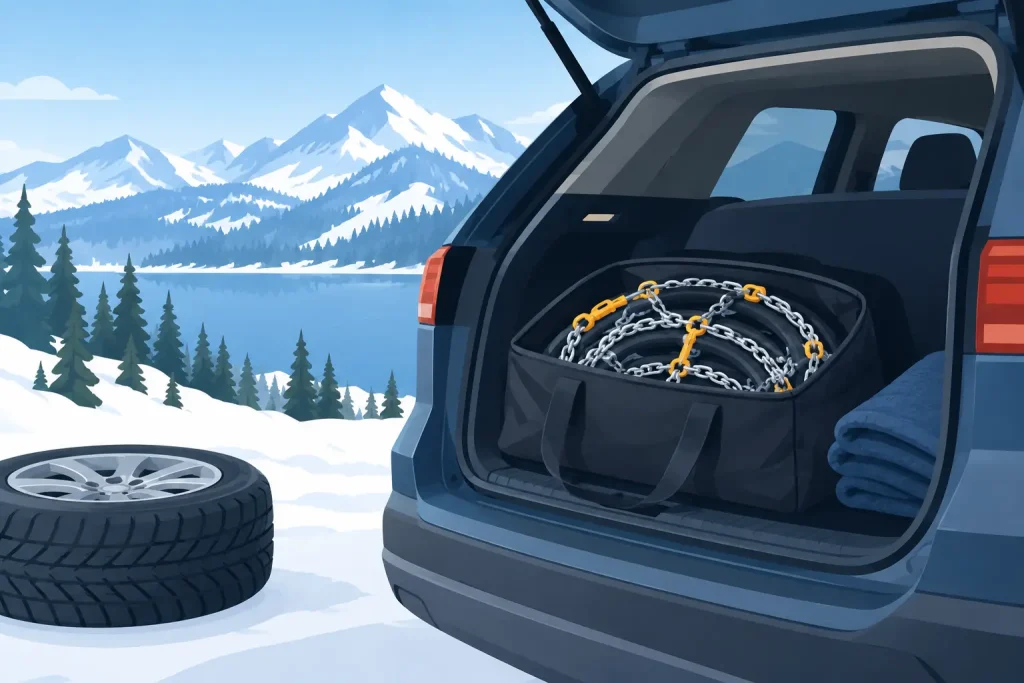
A bluebird morning in Big Bear can begin with clear pavement at the cabin and turn into active chain controls on the road home by afternoon. Knowing how to pack snow chains before you leave Southern California helps keep that change from becoming a stressful roadside scramble. The goal is simple: have the right chains, know they fit, and keep everything you need within easy reach when conditions shift.
For a winter getaway, chains are not just another item to toss in the trunk. They are a piece of safety equipment that may be required on mountain routes, depending on the weather and road restrictions. A little preparation at home leaves more room for the good part of the trip: fresh snow, ski laps, a warm cabin, and an easy evening in the Village.
Start With the Right Chains for Your Vehicle
Before packing, confirm that your chains match your exact tire size. The size is printed on the tire sidewall and usually follows a format such as 225/65R17. Do not rely on the size of a previous vehicle, a guess based on make and model, or a chain set borrowed from a friend.
Your owner’s manual matters here, too. Some vehicles have limited clearance between the tire and suspension components, which may require low-profile chains or traction devices approved for that vehicle. All-wheel drive and four-wheel drive can offer better traction, but they do not automatically remove the need to carry chains when mountain controls are in effect. Check your vehicle guidance for which axle requires chains and what type is permitted.
If you rent a car for your Big Bear trip, ask the rental company about its chain policy well before departure. Some rental agreements restrict chain use, while others may supply approved traction devices. Waiting until snow is falling is the wrong time to learn the details.
How to Pack Snow Chains So They Are Easy to Reach
The best place for chains is where you can reach them without unloading luggage, groceries, skis, or the dog’s travel gear. In an SUV, that may be near the rear hatch. In a sedan, set them at the front of the trunk or in a side compartment rather than under every bag you packed for the weekend.
Keep the chains in their original case if it is sturdy and closes securely. If the original packaging is torn or missing, use a durable, waterproof tote or zippered gear bag. The container protects your interior from road grime and melted snow after use, and it keeps loose tensioners, gloves, and instructions together.
Place a small chain kit alongside the chains. You do not need a huge emergency bin, but you do want the basics in one grab-and-go spot:
- Waterproof gloves or insulated work gloves
- A kneeling pad, old towel, or piece of cardboard
- A headlamp or flashlight with fresh batteries
- A reflective vest or bright outer layer
- A compact snow brush and ice scraper
- A small trash bag for wet, dirty chains after removal
These items make installation much more comfortable when the shoulder is snowy, the pavement is wet, or daylight is fading. They also save your favorite ski gloves from becoming chain-installation gloves.
Keep Instructions With the Chains
Even if you have used chains before, keep the manufacturer’s instructions in the case. Cable chains, diamond-pattern chains, and automatic tensioning systems each work a little differently. A quick reference is especially helpful if one person is installing while another manages traffic awareness, children, or pets inside the warm vehicle.
Avoid packing chains loose in a plastic grocery bag. Sharp links can tear through it, parts can disappear, and wet chains will create a mess after you come down the mountain.
Do a Dry Run Before Your Big Bear Trip
The most useful thing you can do before a snowy drive is practice installing your chains at home on a dry, level surface. Open the case, lay out the chains, identify the inside and outside of each unit, and follow the installation steps from start to finish. Then remove them and repack them properly.
This practice run answers the questions that tend to cause trouble on the road: Are the chains actually the right size? Are all cables, hooks, and tensioners present? Does your vehicle have a clearance issue? Can you install them without watching a video in freezing weather?
You may find that the chains need an adjustment after the first short drive. That is normal with many systems. The important part is learning the process somewhere calm and safe, not at a busy chain-up area while snow is accumulating.
After practicing, inspect the chains for twisted links, frayed cables, cracked components, or rust that could affect their performance. Replace damaged equipment rather than hoping it will hold up when you need it most.
Pack for the Conditions, Not Just the Forecast
Big Bear weather can vary by elevation and change quickly during a storm cycle. A forecast that looks mild in the morning does not guarantee an easy drive later in the day, particularly after fresh snowfall, during overnight freezes, or as temperatures drop near sunset. Carry chains whenever winter conditions are possible, even if you expect dry roads when you leave.
Before departing, check current road conditions, weather, and official chain-control information. If restrictions are active, follow the posted requirements exactly. Chain controls are not suggestions, and they can change between the foothills and the mountain communities.
It also helps to pack your vehicle with a practical margin of comfort. Keep your fuel level healthy, charge your phone before leaving, bring water and snacks, and allow extra time. Rushing is one of the easiest ways to turn a scenic mountain drive into an unpleasant one.
Where and When to Put Chains On
Install chains only in a designated chain-up area or another safe location away from moving traffic. Never wait until your tires are spinning, you are blocking a lane, or you have reached a steep, icy stretch. If controls are active, chain up when directed and before conditions become too difficult.
Once the chains are installed, drive slowly and follow the speed guidance provided by the chain manufacturer. Chains improve traction, but they do not make a vehicle invincible on ice. Leave generous space between vehicles, brake gently, and avoid sudden steering inputs. Four-wheel drive helps you get moving, but careful speed and following distance help you stop.
When roads clear and controls end, remove your chains as soon as it is safe and permitted. Driving on bare pavement can wear down both the chains and your tires. Use that trash bag or waterproof container to store wet chains until you can clean and dry them at your cabin or once you are home.
A Better Winter Arrival Starts Before You Leave
Packing snow chains is a small task that supports the whole trip. It gives you more confidence for the drive, makes it easier to respond to changing conditions, and helps protect the relaxed pace you came to Big Bear for. Whether you are heading up for powder days at Snow Summit or Bear Mountain, a family snow-play weekend, or a peaceful cabin stay with your pup, prepare the car before you prepare the playlist.
A warm mountain home base feels even better when you arrive safely, unhurried, and ready to enjoy the snow outside your door.