

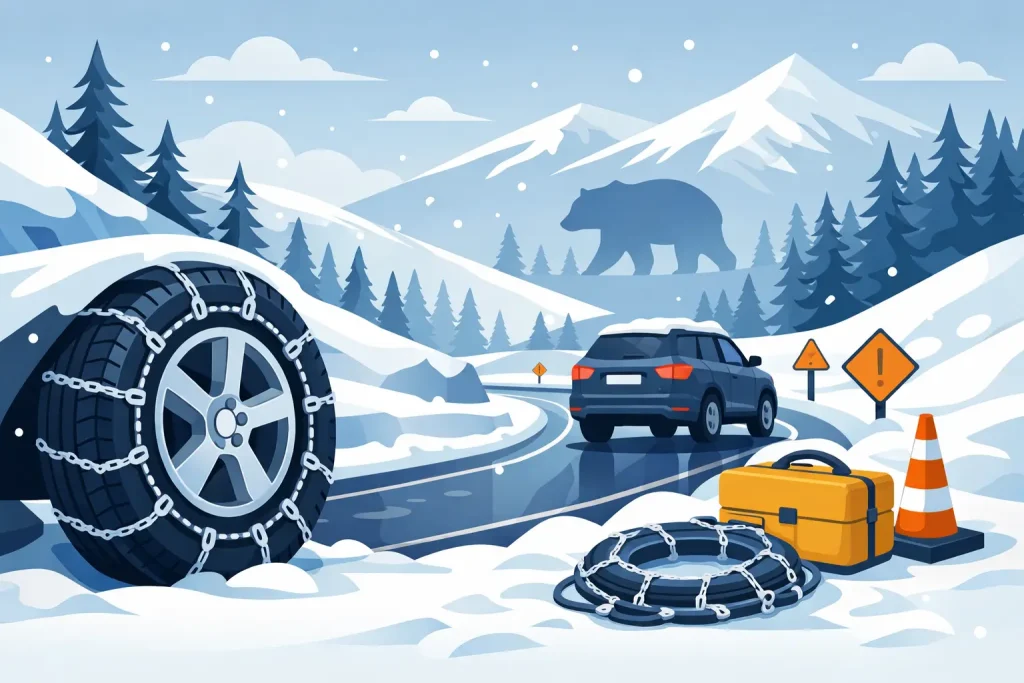
A blue-sky morning in Big Bear can follow a snowstorm that turns the mountain roads into a chain-control route. If you are searching “are chains required Big Bear,” the short answer is: sometimes, and you should always be prepared for them in winter. Requirements change with the weather, the road, and the chain-control level in effect when you travel.
For a relaxed mountain arrival, do not treat chains as a last-minute purchase. Pack the right traction devices, understand what your vehicle can legally do, and check conditions shortly before leaving. That small bit of planning makes more room for the good part of the trip – settling into your cabin, watching snow fall through the pines, and heading out for a day at the slopes.
Are Chains Required in Big Bear?
Chains are required in Big Bear whenever chain controls are active and your vehicle does not qualify for an exemption under the current California chain requirement. Controls are often established on the main mountain approaches, including highways 18, 38, and 330, after significant snow, ice, or freezing conditions.
The key point is that owning an all-wheel-drive or four-wheel-drive vehicle does not mean you can leave traction devices at home. During chain-control periods, authorities can require every vehicle to carry chains or approved traction devices, even if some vehicles are allowed to proceed without installing them at a particular level. Conditions can tighten quickly, especially during an active storm or after dark.
Road requirements are posted at checkpoints and may change between the base of the mountain and Big Bear Lake. Follow the instructions of Caltrans and law enforcement at the checkpoint rather than relying on what worked on a previous trip or what another driver tells you.
California Chain-Control Levels, Explained
California uses three common chain-control levels. Knowing the difference helps you decide whether your vehicle is ready for the drive before you start climbing.
R1: Chains Required, With Snow-Tire Exceptions
Under R1 conditions, chains are required for most vehicles. Passenger vehicles and light-duty trucks under 6,000 pounds may continue without chains installed if they have snow tires on at least two drive wheels. Vehicles with four-wheel drive may be exempt when they have snow tires on all four wheels.
This does not mean a standard all-season tire automatically qualifies. Check the tire sidewall and your vehicle’s specifications before the trip. Even when you qualify for the exemption, carrying chains remains the smart and often required move.
R2: Most Travelers Need Chains Installed
R2 is the level many visitors encounter during a real mountain snow event. Chains or approved traction devices are required on all vehicles except four-wheel-drive or all-wheel-drive vehicles equipped with snow tires on all four wheels.
If you are driving a front-wheel-drive sedan, a rear-wheel-drive SUV, or a two-wheel-drive truck, expect to install chains under R2. If you have AWD or 4WD, do not assume you are exempt until you confirm your tires meet the snow-tire requirement and the checkpoint staff allow you through.
R3: Chains for Everyone
R3 is the most restrictive level. Chains are required on every vehicle, with no exemptions. It is uncommon, but it is possible during severe conditions. If you are not comfortable installing chains, have a vehicle that cannot accept them, or are traveling with very young children or nervous pets, postponing the drive may be the better call.
What Counts as an Approved Traction Device?
For most travelers, this means properly sized tire chains or cable-style traction devices that are approved for their vehicle. The right choice depends on your tire size, wheel clearance, drivetrain, and vehicle manufacturer’s instructions.
Do not buy a generic set at the gas station and assume it will fit. Look at the tire-size code on your sidewall, then purchase a compatible device. Some vehicles have limited clearance around the wheel well and may require low-profile cables or a specific approved traction device. Your owner’s manual is the final word on where chains can be installed and what type is permitted.
Practice at home once, somewhere dry and level. Trying to decode chain instructions while snow is falling, cars are lined up behind you, and your hands are cold is not part of anyone’s ideal Big Bear getaway. Pack gloves, a flashlight or headlamp, a waterproof mat or old towel to kneel on, and a bag for wet gear after removal.
AWD, 4WD, and Snow Tires: What They Do and Do Not Do
All-wheel drive and four-wheel drive improve traction when you accelerate, which is useful on a snowy climb. They do not create unlimited grip for braking or cornering. A heavy SUV with AWD can still slide on black ice, especially downhill.
Snow tires are designed to stay more flexible in cold temperatures and use tread patterns that bite into snow. They can make a meaningful difference in Big Bear winter conditions, but they are not a substitute for slower speeds, extra following distance, and smooth braking. For the chain-control exemptions that apply to AWD and 4WD, snow tires generally need to be on all four wheels.
If you are renting a vehicle, ask the rental company whether chains are permitted and whether the vehicle has qualifying snow tires. Some rental agreements restrict chain use. That is a conversation to have before you leave the airport or begin the mountain drive, not at a checkpoint.
Plan Your Big Bear Drive Around the Forecast
A winter road trip works best when you build in flexibility. Check the forecast and official highway conditions on the morning of departure, then check again shortly before you begin the mountain climb. A forecast calling for snow at lake level, a winter storm warning, or falling temperatures after rain are all signals to bring extra time and be ready for controls.
Try to travel in daylight when possible. You will have better visibility, more time to install chains if needed, and an easier time finding your cabin after arrival. Keep your fuel tank comfortably above half full, charge your phone before heading up, and download directions in case service is spotty along portions of the route.
Avoid stopping in an active traffic lane to put on chains. Use designated chain installation areas and follow posted directions. Once chains are on, drive slowly and stay within the chain manufacturer’s speed guidance. Remove them when you leave the controlled area and the road is clear. Driving chains on bare pavement can damage both the devices and your tires.
Give Your Cabin Arrival Some Breathing Room
Winter weekends can bring busy roads, especially when fresh snow draws skiers, snowboarders, families, and first-time snow players to the mountain. Leave early, pack snacks and water, and let your check-in day have some margin. A little patience is far more valuable than trying to race a storm or beat every other car up the hill.
When choosing your stay, consider how you want to spend the trip after you arrive. A comfortable cabin near the slopes, the Village, the lake, or a quiet Moonridge setting can reduce extra driving once roads are snowy. At Big Bear Lake Vacations, a well-equipped mountain home can be your warm base for cocoa by the fire, a soak after a ski day, and an easier morning before the next adventure.
When It Is Better to Wait
There is no prize for forcing a mountain drive when conditions are beyond your comfort level. Consider delaying travel if R3 controls are in place, your vehicle cannot use chains, the forecast calls for heavy snow during your route, or you have not practiced installing your traction devices. The same goes for drivers who are exhausted after a long flight or are unfamiliar with winter roads.
Big Bear is still waiting when the roads settle down. A safer arrival means you can start the getaway the way it should feel: unhurried, cozy, and ready for the mountain outside your door.