

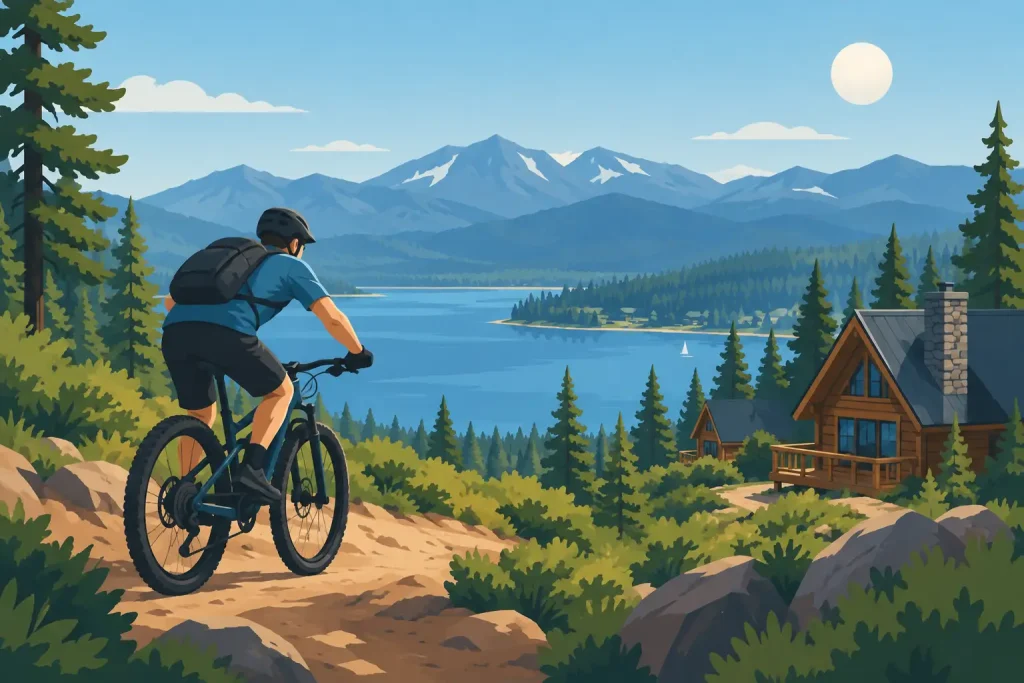
The best rides in Big Bear do not end when you roll back to the trailhead. After a day of berms, pine-scented singletrack, and big mountain views, a private cabin gives you room to rinse off, refuel, and put your feet up. Mountain biking near Big Bear cabins is an easy way to build a weekend around both adventure and comfort – whether your group wants lift-served laps, mellow forest riding, or a little of each.
Big Bear Lake sits at high elevation in the San Bernardino Mountains, where the terrain changes quickly from smooth dirt paths to rocky, technical descents. That variety is part of the appeal. It also means the right ride depends on your ability, the season, and the kind of trip you want to have.
Why Big Bear Is a Great Mountain Bike Getaway
Big Bear is close enough for a Southern California weekend escape but feels like a true mountain break once you arrive. Riders can spend the morning on the trails, take a lunch break in the Village, cool off at the lake in summer, then gather around a fire pit at the cabin after sunset.
The area works especially well for mixed groups. One person may want a full day of downhill riding at Snow Summit while others prefer a lakeside stroll, a scenic drive, shopping, or a relaxed afternoon at the cabin. Choosing a well-located home base keeps everyone close to the action without forcing the entire group into the same itinerary.
Cabin amenities matter after a long ride. A private yard is useful for stretching out and enjoying the mountain air. A spa can be a welcome reward for tired legs. A full kitchen makes early trail starts and post-ride dinners simpler than relying on restaurant schedules. For riders traveling with dogs, pet-friendly cabins can make the getaway feel more complete, though dogs should stay home during most bike rides for their safety and the safety of other trail users.
Mountain Biking Near Big Bear Cabins: Where to Ride
Big Bear offers both managed bike-park terrain and public forest routes. They deliver very different experiences, so it is worth planning around the riding style your group actually enjoys.
Snow Summit Bike Park
For gravity-focused riders, Snow Summit Bike Park is usually the headline experience. During its operating season, the chairlift carries riders and bikes uphill for repeated downhill laps. Trails range from approachable flow routes to features, jumps, steeper lines, and technical sections that reward experienced handling skills.
This is the best choice for riders who want to maximize downhill time, test themselves on purpose-built terrain, or take a lesson before progressing. First-time park riders should not feel pressured to start on the biggest features. Begin with easier trails, pay attention to bike-park signage, and work up slowly. A full-face helmet, knee pads, gloves, and a properly maintained bike are smart additions for many riders, especially on faster descents.
Bike park operations, trail availability, and lift schedules can change with weather and the time of year. Check current conditions before you drive up, particularly during shoulder seasons when storms or maintenance may affect access.
Forest Roads and Cross-Country Routes
Riders looking for a more self-paced day can find a different kind of challenge on the forest roads, doubletrack, and trail networks around Big Bear. These rides are often about scenery as much as speed: tall pines, open ridgelines, changing terrain, and quiet stretches away from the busier resort areas.
Cross-country and trail riders should be comfortable with route-finding and changing surface conditions. Some routes are loose and rocky, while others can be sandy, rutted, or affected by recent weather. Cell service can be inconsistent in mountain areas, so download maps before leaving your cabin and carry more water, food, and repair supplies than you think you will need.
Public-land access can change due to fire restrictions, trail work, storms, or seasonal closures. Never assume a route that was open last summer will be open this weekend. Current local conditions should guide the plan.
Easy Scenic Spins Near Town
Not every bike day needs to be an all-day effort. For families, newer riders, or groups bringing a mix of bike types, a relaxed cruise near the lake or around quieter neighborhood roads can be a great way to see Big Bear at a gentler pace. These outings are better for sightseeing, coffee stops, and easing into the mountain elevation than for technical riding.
If children are riding, choose routes with low traffic and keep expectations modest. Altitude can surprise visitors, especially on the first day. A short ride followed by a lakefront picnic or cabin afternoon is often more enjoyable than pushing through fatigue.
Choose a Cabin That Supports Your Ride Day
The best cabin for a bike trip is not always the one closest to a single trailhead. Think about the full rhythm of the weekend: where you will park, how many people are traveling, whether you want easy access to Snow Summit or Bear Mountain, and how much downtime your group wants between rides.
A cabin near the ski resorts can make early starts at the bike park easier, while a stay closer to the Village or lake offers convenient dining, groceries, and evening activities. Moonridge is a popular area for travelers who want a peaceful mountain setting with practical access to the resort side of town.
For groups, look for enough bedrooms to give everyone breathing room and common spaces where the day can wind down together. A cabin with a garage, driveway space, or easy loading area is also helpful when you are traveling with several bikes. Before booking, confirm the property’s parking details and avoid storing bikes in ways that could damage interior finishes or block walkways.
At Big Bear Lake Vacations, properties such as Bear Mountain Lair and Peak & Quiet are designed around the comfort and location travelers want from a mountain home base. The right fit comes down to your group size, preferred neighborhood, and whether your ideal recovery plan involves a hot tub, a fenced yard for the dog, or a quiet deck under the pines.
Plan for Big Bear’s Elevation and Weather
Big Bear’s elevation is one of its biggest advantages in warm-weather months, but it changes how a ride feels. Visitors arriving from lower elevations may notice heavier breathing, quicker fatigue, or headaches if they have not hydrated well. Give yourself time to adjust, drink water throughout the day, and bring electrolytes for longer rides.
Summer mornings are often the most comfortable time to pedal, especially if afternoon thunderstorms are possible. In late summer and fall, temperatures can feel perfect in the sun but cool quickly in the shade or after sunset. Pack a light layer even when the forecast looks warm.
Spring and fall are more variable. Snowmelt, rain, mud, wind, and overnight freezes can all affect trail conditions. Winter is generally not the season for traditional mountain biking at higher elevations, though conditions vary from year to year. If riding is the main purpose of your trip, flexible dates give you the best chance of catching favorable trails.
Ride Responsibly on Big Bear Trails
A great Big Bear bike weekend depends on riders taking care of the terrain and sharing it thoughtfully. Stay on designated routes, yield appropriately, control your speed around blind corners, and do not skid through turns. Loose mountain soil can be damaged quickly, especially after rain or during snowmelt.
Carry a tube or plug kit, pump or CO2, multitool, first-aid basics, water, and a charged phone. Tell someone where you are going if you are riding remote routes. Wildlife and changing conditions are part of the mountain experience, but they are also a reminder to give yourself plenty of daylight and avoid taking unnecessary risks.
After the ride, keep the cabin just as enjoyable for the next day. Brush off mud and pine needles outside, secure bikes overnight, and use the time to check tire pressure, recharge lights, and look over the next day’s route. Then make room for the part of the trip that matters just as much: a good meal, mountain air, and a comfortable place to rest before tomorrow’s ride.