

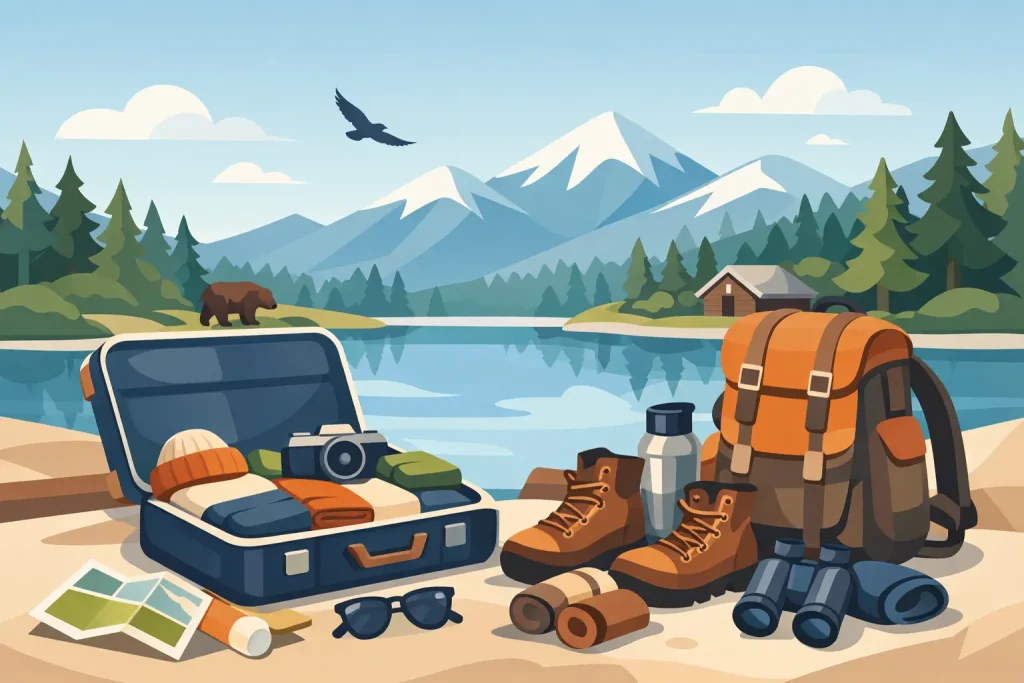
A Big Bear getaway can start with bluebird ski weather, shift to a snowy evening by the fire, and end with a sunny Village stroll. That is why knowing how to pack for Big Bear is less about filling a suitcase and more about preparing for mountain conditions, seasonal adventures, and the kind of cozy cabin time you came to enjoy.
At roughly 7,000 feet, Big Bear Lake can feel noticeably cooler than Southern California at home, especially after sunset. Pack for the activity on your itinerary, but always leave room for layers. A little preparation means less time searching for an extra jacket and more time on the slopes, by the lake, or relaxing at your mountain home base.
Start With Layers, Not Just a Heavy Jacket
Mountain weather has range. Summer afternoons can be comfortably warm, while mornings and evenings call for a sweatshirt or insulated layer. During fall, winter, and early spring, temperatures can drop quickly, and wind or snow can make the same forecast feel much colder.
Build your daily outfits around three simple layers: a moisture-wicking base layer, a warm middle layer such as fleece or wool, and a weather-resistant outer layer. This approach is far more useful than bringing one oversized coat that only works in the coldest conditions. It also makes it easy to adjust when you move from a sunny trail or ski run to a heated restaurant or cabin.
Choose shoes based on your plans. Comfortable sneakers work for the Village, casual dining, and dry summer trails. For snowy days, bring waterproof boots with reliable traction and enough room for warm socks. Avoid relying on smooth-soled fashion boots when snow or ice is in the forecast. They may look great in photos, but they are not much help on a slippery driveway.
How to Pack for Big Bear by Season
Your suitcase will look different for a January snow trip than it will for a July lake weekend. Checking the forecast close to departure is always smart, but these seasonal basics make an excellent starting point.
Winter: Snow Days and Ski Weekends
Winter packing is about staying dry, warm, and comfortable outside. If skiing or snowboarding is on the schedule, bring a waterproof jacket and pants, insulated gloves or mittens, warm socks, goggles, and a helmet if you prefer your own. A neck gaiter is often more practical than a loose scarf, especially on chairlifts or during snowy walks.
Even non-skiers should pack snow-ready outerwear. A waterproof coat, beanie, gloves, boots, and thick socks make snow play, tubing, photos, and evenings around town much more enjoyable. Hand warmers are small, easy to pack, and especially welcome for kids and anyone who gets cold quickly.
Winter driving deserves its own packing plan. Keep chains that fit your vehicle, a flashlight, phone charging cable, windshield scraper, blanket, water, and snacks accessible in the car rather than buried beneath luggage. Chain controls and road conditions can change with an incoming storm, so leave extra time and travel with a full tank of gas.
Spring and Fall: Pack for Changing Conditions
Spring and fall are ideal for travelers who want crisp mountain air, quieter trails, and room to explore without peak-season crowds. They also bring the widest temperature swings. You may be comfortable in a T-shirt during a sunny afternoon, then want a puffer jacket after dinner.
Bring light layers, a packable rain jacket, long pants, and closed-toe walking shoes. Spring can still bring late-season snow, while fall mornings can be frosty before warming up. If hiking is on your list, add a small daypack with water, sunscreen, snacks, and an extra layer. The higher elevation can make the sun feel stronger than expected, even when the air is cool.
Summer: Lake Time, Trails, and Cool Evenings
Summer in Big Bear is made for boating, paddling, fishing, hiking, biking, and slow afternoons on the cabin deck. Pack swimsuits, quick-dry towels, water shoes or sandals with grip, sunglasses, a hat, and plenty of sunscreen. A reusable water bottle is a must for trail days and lake outings.
Do not skip the sweatshirt. Big Bear summer evenings are one of the best reasons to escape the heat, but that refreshing cool-down can surprise visitors who pack only shorts and tank tops. A light jacket or hoodie belongs in every summer bag, along with long pants for fireside conversations and stargazing.
Pack Around Your Big Bear Itinerary
The easiest way to avoid overpacking is to think in activity groups. A ski trip, a lake weekend, and a cozy couples retreat require different gear, although every trip benefits from layers and comfortable shoes.
For a snow sports getaway, prioritize performance gear and warm accessories. Rental equipment can reduce what you need to haul, but personal essentials such as goggles, gloves, ski socks, and base layers are worth bringing. Families should pack one extra pair of gloves for each child. Wet gloves can end a snow day early.
For hiking and biking, bring trail-ready shoes, sun protection, a daypack, and a basic first-aid kit. Stick to layers instead of cotton-heavy outfits, especially if you will be active. Cotton holds moisture and can leave you chilled once the temperature drops.
For lake days, bring a dry bag for phones and keys, a cover-up, refillable water bottles, and a change of clothes for the ride back to your cabin. If fishing is the focus, organize licenses, tackle, and cooler space before leaving home. A little planning keeps the car from becoming a tangle of wet towels, rods, and snack bags.
Make the Cabin Part of the Packing Plan
A well-equipped cabin lets you travel lighter. Rather than packing an entire kitchen, focus on the food and personal items that make your stay feel easy: favorite coffee, breakfast staples, trail snacks, ingredients for a relaxed dinner, and any specialty cookware you cannot go without.
For group stays, designate one person to bring shared items such as board games, a deck of cards, a portable speaker, or ingredients for s’mores if your plans include an outdoor fire feature. Keep these simple. The real luxury of a cabin trip is having space to slow down together, not hauling half your house into the mountains.
If you plan to enjoy a private spa, add swimsuits, sandals, hair ties, and a warm cover-up for the walk back inside. For cabins with fenced yards or outdoor seating, a throw blanket and a favorite book can turn an unplanned afternoon into the best part of the trip.
At Big Bear Lake Vacations, many homes are designed for this balance of adventure and comfort, with convenient access to the lake, ski resorts, trails, and the Village. When choosing your stay, consider the amenities that can simplify your packing, such as laundry, a full kitchen, a spa, an EV charger, or a fenced yard for your dog.
Traveling With Your Dog? Bring Mountain-Ready Basics
Big Bear is a wonderful place to share fresh air and trail time with your pup, but mountain travel adds a few essentials. Pack food, treats, bowls, a leash, waste bags, bedding or a familiar blanket, medications, and a towel for muddy paws or snowy fur. A reflective collar light is helpful for early mornings and dark evenings.
Dogs can feel the cold too. Short-haired, senior, and small dogs may need a warm jacket for winter walks. In summer, protect paws from hot pavement and always carry water. Conditions vary by trail and season, so check local rules before heading out and keep wildlife awareness in mind.
The Small Things That Make Arrival Easier
A few practical items can make a big difference once you reach the mountains: chargers, backup batteries, medications, sunglasses, lip balm, moisturizer, and a small grocery tote. Dry mountain air is real, particularly in winter, and hydration matters more at elevation. Drink water throughout the drive and give yourself time to settle in if you feel tired after arrival.
Keep a separate arrival bag within reach. It should include your warm layer, boots if weather requires them, toiletries, pajamas, medication, and anything needed for the first evening. After a mountain drive, nobody wants to unzip every suitcase just to find a toothbrush or phone charger.
Pack thoughtfully, watch the forecast, and leave a little extra room for flexibility. Big Bear is at its best when you can say yes to a surprise snow shower, an extra hour by the lake, or a spontaneous sunset walk outside your cabin.