

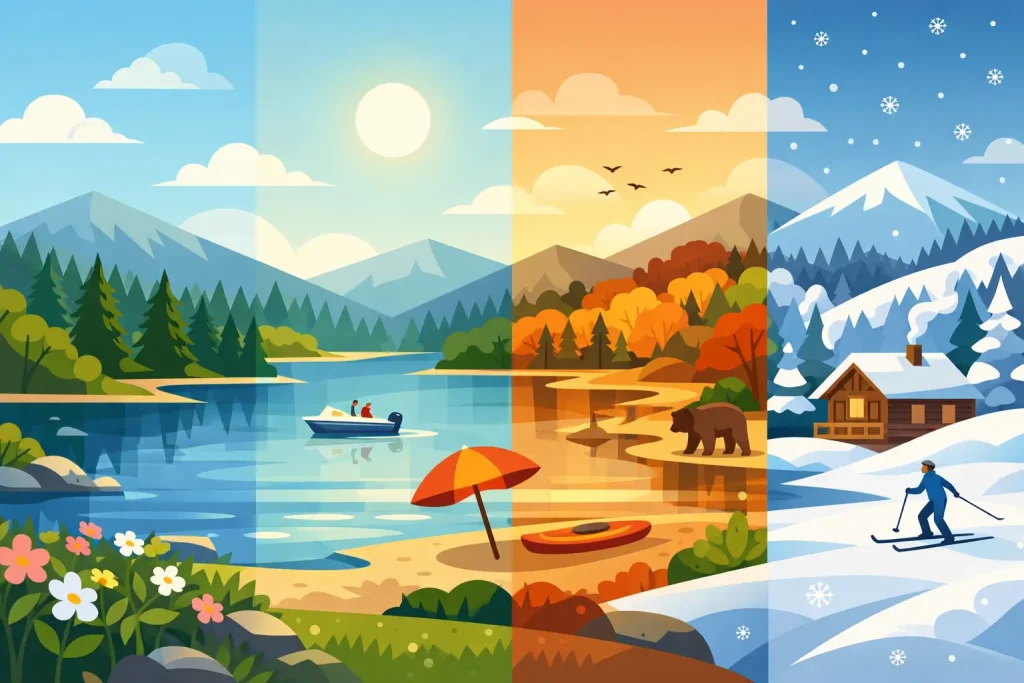
The forecast can shape your Big Bear getaway as much as your cabin choice. This Big Bear Lake weather guide helps you plan for the mountain’s changing seasons, from fresh powder mornings near Bear Mountain to warm lake afternoons and crisp fall hikes. At roughly 6,700 feet in elevation, Big Bear often feels pleasantly removed from Southern California’s heat, but mountain conditions can change quickly.
A little planning goes a long way. Bring layers, check the forecast close to departure, and choose a comfortable home base where you can warm up after an adventure or relax when the weather calls for a slower day.
What Makes Big Bear Lake Weather Different?
Big Bear Lake has a four-season mountain climate. Days can be sunny and mild while evenings turn cold, especially in spring, fall, and winter. Summer temperatures are usually far more comfortable than the inland valleys, while winter can bring snowstorms, icy roads, and excellent conditions for skiing, snowboarding, and snow play.
Elevation is the key factor. The sun can feel strong even when the air is cool, and shade, wind, and overnight freezing temperatures can create very different conditions within the same day. A bright afternoon by the lake may be followed by a frosty evening around the fire pit.
For most visitors, the best approach is simple: pack for the season, then add one warmer layer than you think you will need.
Big Bear Lake Weather by Season
Winter: Snow Days and Cozy Cabin Nights
Winter is Big Bear’s classic snow season, generally running from December through March, though storms and snowfall timing vary from year to year. Daytime temperatures often hover in the 30s and 40s, while nighttime lows can fall below freezing. Snowy conditions are possible well into early spring.
This is the season for Snow Summit and Bear Mountain, tubing, sledding, snowshoeing, and the simple joy of waking up to a snow-covered pine forest. It is also the season that requires the most travel flexibility. A major storm can affect highway conditions, parking, and arrival times, especially on busy holiday weekends.
If snow is in the forecast, carry chains for your vehicle if required, know how to install them, and leave extra time for the drive. Four-wheel drive can be helpful, but it does not replace safe tires, careful driving, or chain requirements when they are in effect. Once you arrive, a well-equipped cabin with heating, a fireplace, or a hot tub turns a snowy day into part of the vacation.
Spring: Quieter Trails and Changing Conditions
Spring in Big Bear is a transition season, often bringing sunny afternoons, cool mornings, and occasional late snow. March can still feel very much like winter, while April and May gradually introduce greener landscapes, emerging wildflowers, and more comfortable hiking weather.
The trade-off is unpredictability. One weekend may be ideal for a lakeside walk and patio dining in the Village; the next may bring wind, rain, or a late-season dusting of snow. Pack waterproof outerwear and shoes that can handle muddy trail edges or slushy patches.
Spring is a wonderful time for couples and families who want a more peaceful mountain escape without the peak winter crowds. It is also a smart season for travelers who enjoy a mix of outdoor time and cozy indoor comforts.
Summer: Lake Time, Sunshine, and Cool Mountain Air
Summer is one of the most popular times to visit Big Bear Lake. Typical daytime highs often land in the 70s or low 80s, offering a welcome break from hotter Southern California cities. Evenings commonly cool into the 40s or 50s, so a sweatshirt or light jacket is still essential after sunset.
This is prime time for boating, kayaking, paddleboarding, fishing, mountain biking, hiking, and relaxing by the water. Early mornings are especially pleasant for active outings, while afternoons are made for lake views, a cabin deck, or a refreshing break indoors.
Summer weather does come with two planning notes. Afternoon thunderstorms can develop in mountain areas, particularly during late summer monsoon patterns, so check conditions before heading far from shelter. Wildfire risk can also affect air quality, trail access, and outdoor plans during dry periods. If conditions shift, Big Bear still offers plenty of ways to enjoy the day, from Village browsing to a long cabin brunch and a soak in the spa.
Fall: Crisp Air and Golden Mountain Getaways
Fall is a favorite for travelers who want quieter roads, cooler hiking weather, and that first unmistakable feeling of mountain sweater season. September can still offer warm afternoons, while October and November bring colder nights and an increasing chance of frost or early snow.
Expect daytime conditions that work well for hiking, biking, and scenic drives, but do not underestimate the evening chill. A sunny fall afternoon can feel easygoing in a T-shirt, then require a jacket, beanie, and fire pit plans after dark.
Fall is also an excellent season for dog-friendly stays. Cool trails, open outdoor spaces, and fewer crowds make it easier to enjoy a relaxed mountain weekend with your four-legged travel companion.
Road Conditions Matter as Much as the Forecast
Weather in Big Bear is not only about what happens after you arrive. It also affects your drive up and down the mountain. Winter storms can lead to chain controls, reduced visibility, and slower traffic. Heavy rain may create slick roads, while fog and ice can appear during colder months and early mornings.
Before leaving, check road conditions as well as the weather forecast. If a storm is expected, travel during daylight when possible, keep your gas tank comfortably above empty, and avoid rushing. Mountain roads reward patient drivers.
For summer and fall trips, the roads are usually more straightforward, but weekend traffic can still add time. Arriving early gives you more daylight to settle into your cabin, unpack the gear, and start your getaway at an easy pace.
What to Pack for Big Bear Lake Weather
Big Bear packing is less about bringing more and more about bringing versatile pieces. Temperatures can swing enough in a single day that layers are useful in every season.
For most trips, bring these essentials:
- A warm mid-layer such as a fleece, sweatshirt, or insulated jacket
- A waterproof outer layer, especially from fall through spring
- Comfortable closed-toe shoes with dependable traction
- Sunscreen, sunglasses, and a hat for high-elevation sunshine
- A reusable water bottle to stay comfortable in the dry mountain air
Winter visitors should add waterproof boots, gloves, a beanie, thick socks, and snow-ready pants if skiing or playing outside. Summer visitors may want swimwear, sandals for the lake, and an extra light layer for evenings. If you are traveling with a dog, pack a towel for muddy paws, a leash, water, and a warm bed or blanket for chilly nights.
Planning the Right Stay for the Season
The best cabin features depend on your trip. In winter, proximity to Snow Summit or Bear Mountain can make early lift access and snowy return trips much easier. A fireplace, spa, game room, and comfortable gathering space matter even more when your group wants a warm place to land after a full day outside.
During summer, look for outdoor seating, a grill, fenced yard space, and convenient access to the lake, trails, or the Village. Spring and fall are ideal for travelers who want the flexibility to hike, explore, cook together, and enjoy quiet evenings without building the entire trip around one activity.
Big Bear Lake Vacations offers cabin and chalet stays designed to make that flexibility feel easy, whether your plans include powder days, lake days, or a peaceful weekend with the dog. The right home base gives you room to enjoy the forecast rather than work around it.
Mountain weather is part of what makes Big Bear memorable. Check conditions before you go, bring layers, give yourself extra time on the road, and leave space in the itinerary for an unplanned snowy walk, sunset by the lake, or cozy night in.